
Concrete vs. Asphalt Driveway in Vineyard: Which Is Better?
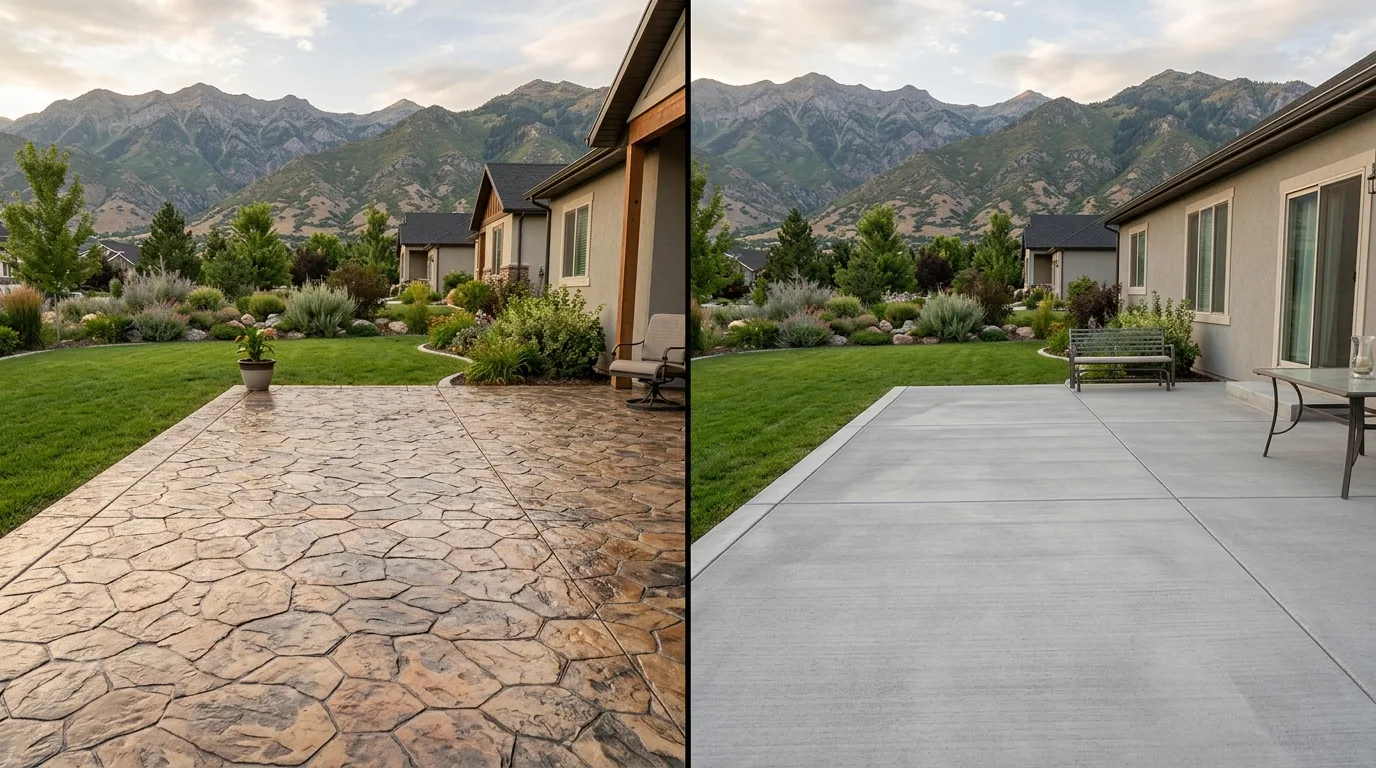
Homeowners in Vineyard, Utah choosing a new driveway material often ask the same question: is concrete or asphalt the better choice? It’s a reasonable question — both are common, both work, and both have pros and cons specific to Utah County’s climate. In this post, we compare concrete and asphalt across the factors that matter most to Vineyard homeowners: upfront cost, long-term durability, maintenance requirements, and performance in freeze-thaw conditions.
Free Driveway Estimate in Vineyard
Whether you choose concrete or another material, we provide honest pricing and transparent specs.
Upfront Cost: Asphalt Is Cheaper Initially
Asphalt driveways in Vineyard typically cost $3–$5 per square foot installed, compared to $5–$8 per square foot for plain gray concrete. On a 400-square-foot driveway, that’s a $2,000–$3,200 difference in favor of asphalt. For homeowners with tight upfront budgets, asphalt’s lower initial cost is the primary argument in its favor.
The lower cost comes from both material and labor. Asphalt can be poured and compacted in a single operation with a faster finishing process than concrete, and petroleum-based asphalt is generally less expensive per ton than ready-mix concrete in most Utah County markets. However, Utah County’s ready-mix prices of $125–$150 per yard are moderately elevated compared to national averages, which keeps the concrete-vs-asphalt cost gap in this market somewhat narrower than in lower-cost regions.
Long-Term Durability: Concrete Wins in Utah County
Concrete driveways properly installed in Vineyard last 30–50 years. Asphalt driveways typically last 15–25 years before requiring major rehabilitation or replacement. The gap in service life is larger in Utah County than in more temperate climates because of the freeze-thaw cycling that Vineyard’s elevation and climate produce.
Asphalt is a flexible material — it bends slightly under load and accommodates some soil movement. In warm climates with no freeze-thaw, this flexibility is an advantage. In Vineyard’s climate, asphalt faces two additional challenges: it softens in summer heat above 90°F (causing rutting under vehicle loads and deformation under jack stands or RV stabilizers), and it becomes brittle in cold temperatures, increasing cracking risk during winter. The combination of summer softening and winter brittleness accelerates asphalt aging in Utah County relative to more moderate climates.
Concrete Driveways Built to Last in Vineyard
Air-entrained mixes, proper base prep, and sealing — engineered for Utah County's climate. Call (888) 376-0955.
Maintenance Requirements: A Significant Difference
Asphalt: Requires resealing every 3–5 years to prevent UV degradation and water infiltration. Seal coat is a petroleum-based product that restores the surface binder. Without resealing, asphalt oxidizes, becomes brittle, and develops widespread cracking within 7–10 years. Crack filling is required whenever cracks appear. In Vineyard’s climate, asphalt maintenance is a recurring annual cost, not a one-time project.
Concrete: Requires resealing every 3–5 years, but the sealing product is different — a penetrating concrete sealer rather than petroleum-based sealcoat — and the consequence of skipping it is slower. Concrete without sealing in Vineyard’s freeze-thaw climate will show surface spalling within 10–15 years; concrete that’s sealed every 3–5 years can go 30+ years without major surface deterioration. Cracks still require filling when they appear, but concrete’s rigid structure means cracks occur less frequently under normal conditions.
The maintenance math: Over 30 years, a Vineyard asphalt driveway might require 6–8 sealcoat applications at $300–$500 each, plus periodic crack repair and possible overlay at year 15–20. A concrete driveway requires 6–8 sealer applications at $200–$400 each, with crack repair as needed. Total maintenance costs are roughly comparable, but the concrete driveway lasts longer — meaning the total cost per year of service is lower for concrete.
Performance in Vineyard’s Freeze-Thaw Climate
The clearest advantage for concrete in Vineyard is resistance to freeze-thaw damage. Air-entrained concrete is specifically engineered to resist the internal pressure of freezing water. Asphalt, while somewhat flexible, does not have an equivalent protective mechanism and depends on reseal coatings to prevent water entry. When asphalt sealing is deferred, water infiltrates, freezes, and produces the classic “alligator cracking” pattern that indicates structural failure of the surface layer.
Summer performance is the reverse: asphalt handles the freeze-thaw season better than poorly sealed concrete, but performs worse in summer heat. Vineyard’s July average high of 93°F is enough to soften asphalt slightly, and vehicle parking on hot summer days can leave tire impressions in asphalt driveways — an aesthetic issue that doesn’t affect concrete. Homeowners in the Washington, Parkside, and Solstice sub-neighborhoods of Waters Edge who park RVs or heavy vehicles report asphalt impressioning as a recurring nuisance.
Types of Situations Where Each Material Excels
Choose concrete when:
- Budget allows the higher upfront cost
- The driveway will see heavy vehicles (RVs, trucks, commercial vehicles)
- You want minimal long-term maintenance obligation
- You’re interested in decorative options (stamped, colored)
- The driveway will be on a slope where asphalt softening could cause issues
Choose asphalt when:
- Upfront cost is the primary constraint
- You plan to sell the home within 10–15 years and want to minimize initial investment
- The driveway is in a shaded area that stays cool (reduces asphalt softening risk)
- You don’t mind the recurring sealcoat maintenance requirement
Frequently Asked Questions
Over 25 years, which costs more in Vineyard — concrete or asphalt?
Over 25 years, concrete typically costs less per year of service in Vineyard’s climate despite the higher upfront cost. The combination of longer service life, comparable maintenance costs, and the absence of asphalt’s summer performance limitations makes concrete the better long-term value for most Utah County homeowners.
Can I upgrade from asphalt to concrete?
Yes — the asphalt is removed, the base is assessed and upgraded as needed, and concrete is poured on the existing sub-base. This is a common upgrade path for Vineyard homeowners replacing deteriorating asphalt driveways. Read our guide on concrete driveway costs in Vineyard for pricing.
Does concrete crack more than asphalt?
Properly installed concrete with adequate control joints cracks less than properly maintained asphalt in Vineyard’s climate. The key word is “properly installed” — concrete without proper joints, base prep, or sealing can develop cracking that makes asphalt look better by comparison. Quality installation is the most important variable for either material.
Make the Right Driveway Decision for Vineyard
Talk to Vineyard Concrete — we give honest recommendations, not just the option that benefits us most. Call (888) 376-0955.
Related: