
Best Time to Pour Concrete in Vineyard UT: Seasonal Guide
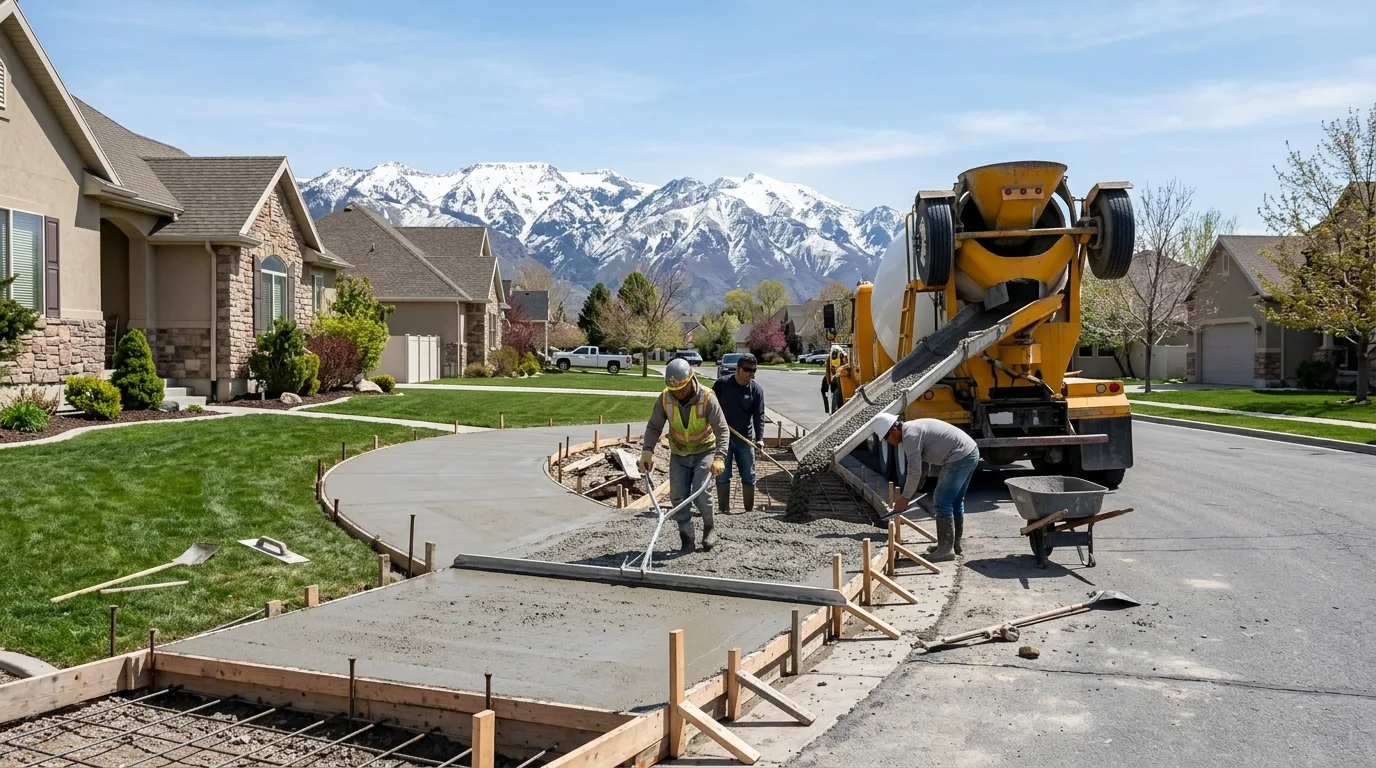
Timing a concrete pour in Vineyard, Utah matters more than most homeowners realize. Get it right and the concrete cures properly, reaches full design strength, and provides decades of service. Get it wrong — pouring into a hard freeze or a 95°F summer afternoon without planning — and you risk surface defects, compromised strength, or cracking that appears before the first winter. In this post, we cover the best seasons for concrete work in Vineyard, what happens to concrete outside the ideal range, and what protections allow work to proceed in challenging conditions.
Planning Concrete Work in Vineyard This Season?
Call us to check scheduling and get a free estimate — we work year-round with the right precautions.
Why Temperature and Season Matter for Concrete
Concrete gains strength through a chemical reaction called hydration — the process by which water reacts with cement particles to form the calcium silicate hydrate crystals that give concrete its hardness. This reaction is temperature-sensitive: it slows dramatically below 50°F and stops almost entirely below 40°F. Extreme heat accelerates the reaction too fast, leaving less time for finishers to work the surface and potentially causing rapid moisture loss before the concrete properly hydrates.
At 4,521 feet elevation in Vineyard, these temperature effects are more pronounced than in lower-elevation Utah County cities. Temperature swings between day and night are larger, frost arrives earlier in fall and lingers later in spring, and summer afternoons can hit 93°F while evenings cool into the 60s. Concrete placed in Vineyard needs to account for these diurnal swings, not just the daytime high.
Spring: The Best Season for Concrete in Vineyard
Spring (March through May) is the optimal window for concrete pours in Vineyard. Average temperatures in the 50–70°F range are ideal for hydration — fast enough to reach adequate strength within a reasonable timeframe, slow enough to allow proper finishing. Lower humidity compared to summer allows better moisture control during curing, and the combination of stable daytime temperatures and cool nights reduces thermal stress on fresh concrete.
Contractor scheduling is typically better in spring than summer. Homeowners planning driveways, patios, or foundations in Vineyard benefit from scheduling spring work in late winter. Lead times of 4–6 weeks are normal for established concrete contractors in Utah County during peak season; calling in February or early March often secures better scheduling windows than waiting until May when demand peaks.
Spring Concrete Work in Vineyard — Book Early
Spring schedules fill fast. Call Vineyard Concrete now to reserve your project window.
Fall: Second-Best Window (With an Important Caveat)
Fall (September through mid-October) is the second-best season for concrete in Vineyard. Temperatures are similar to spring, contractor availability is often better than summer, and there’s a sense among experienced contractors that fall concrete sometimes cures slightly stronger due to slower temperature decline. However, frost risk begins around October 5 in Vineyard — a critical calendar marker that constrains fall pours.
Concrete needs at least 7 days above 40°F to reach adequate early strength before a hard freeze can damage it. A pour in late September gives comfortable margin; a pour in mid-October requires careful monitoring of the forecast and may require protective blankets overnight. Homeowners planning fall projects should communicate their timeline clearly with the contractor so the pour date can be confirmed against the long-range forecast.
Summer: Manageable with Precautions
Summer (June through August) in Vineyard brings July highs averaging 93°F and low humidity. Concrete can be poured in these conditions, but it requires planning. High temperatures accelerate concrete setting, giving finishers less time to work the surface and increasing the risk of plastic shrinkage cracking — surface cracks that appear within hours of placement before the concrete has gained strength.
Precautions for summer pours in Vineyard include scheduling the pour for early morning (before 10 AM), using chilled mix water or ice from the ready-mix plant, shading the slab during and after placement, applying evaporation retarder to the surface, and curing with wet burlap or curing blankets for the full 7-day early period. Experienced contractors working in Utah County routinely manage these conditions; less experienced crews may produce surface blemishes that are difficult to reverse.
Winter: Possible but Regulated
Winter concrete work in Vineyard is governed by the city’s Cold Weather Policy, which defines minimum concrete temperatures, protection requirements, and inspection procedures for pours when ambient temperatures are below 40°F or frost is forecast within 24 hours of placement.
Winter pours require heated enclosures or insulated concrete blankets to maintain the fresh concrete above 50°F for at least the first 7 days. Accelerating admixtures (calcium chloride or non-chloride alternatives) speed strength gain, but chloride-based accelerators should not be used in concrete with steel reinforcement due to corrosion risk. The added cost of winter protection — blankets, enclosures, accelerators, extended curing periods — typically adds 15–25% to project cost.
For residential projects, winter work is usually not cost-effective unless there is a schedule-driven reason to proceed. Foundations for new construction are sometimes unavoidable in winter; discretionary projects like driveways and patios almost always benefit from waiting for spring.
Practical Timing Guide for Vineyard Homeowners
- March–May: Pour with standard precautions. Best scheduling availability in early spring.
- June–August: Pour early in the day with summer heat protections. Expect premium for experienced crews.
- September–October 1: Excellent conditions, similar to spring. Book early.
- October 1–15: Acceptable with fall precautions and frost monitoring.
- October 15–March: Cold Weather Policy applies. Winter work is possible but adds cost and complexity.
For concrete repair work specifically, see our post on 5 signs your Vineyard concrete needs repair and our winter concrete pouring guide.
Frequently Asked Questions
Can you pour concrete in winter in Vineyard, Utah?
Yes, but Vineyard’s Cold Weather Policy requires heated protection and additional quality measures. Most residential projects are better deferred to spring. New construction with hard schedule deadlines sometimes requires winter pours; consult with your contractor about the added cost and precautions.
What’s the worst time to pour concrete in Vineyard?
Unprotected pours below 40°F and unprotected pours above 90°F in direct afternoon sun without precautions are the two conditions that most reliably produce problems. A concrete driveway or patio poured into a hard freeze without blankets and enclosures risks permanent strength reduction — the damaged concrete cannot be “fixed” after the fact.
How far in advance should I book concrete work in Vineyard?
For spring work, 6–8 weeks in advance is ideal. Summer schedules may have more flexibility but also more competition. Fall schedules (September–October) should be confirmed by late August to secure good timing windows before the frost-risk period begins.
Schedule Your Vineyard Concrete Project
Vineyard Concrete works all four seasons with the right precautions. Call (888) 376-0955 for scheduling and a free estimate.
Related: