
5 Signs Your Vineyard Concrete Driveway Needs Repair
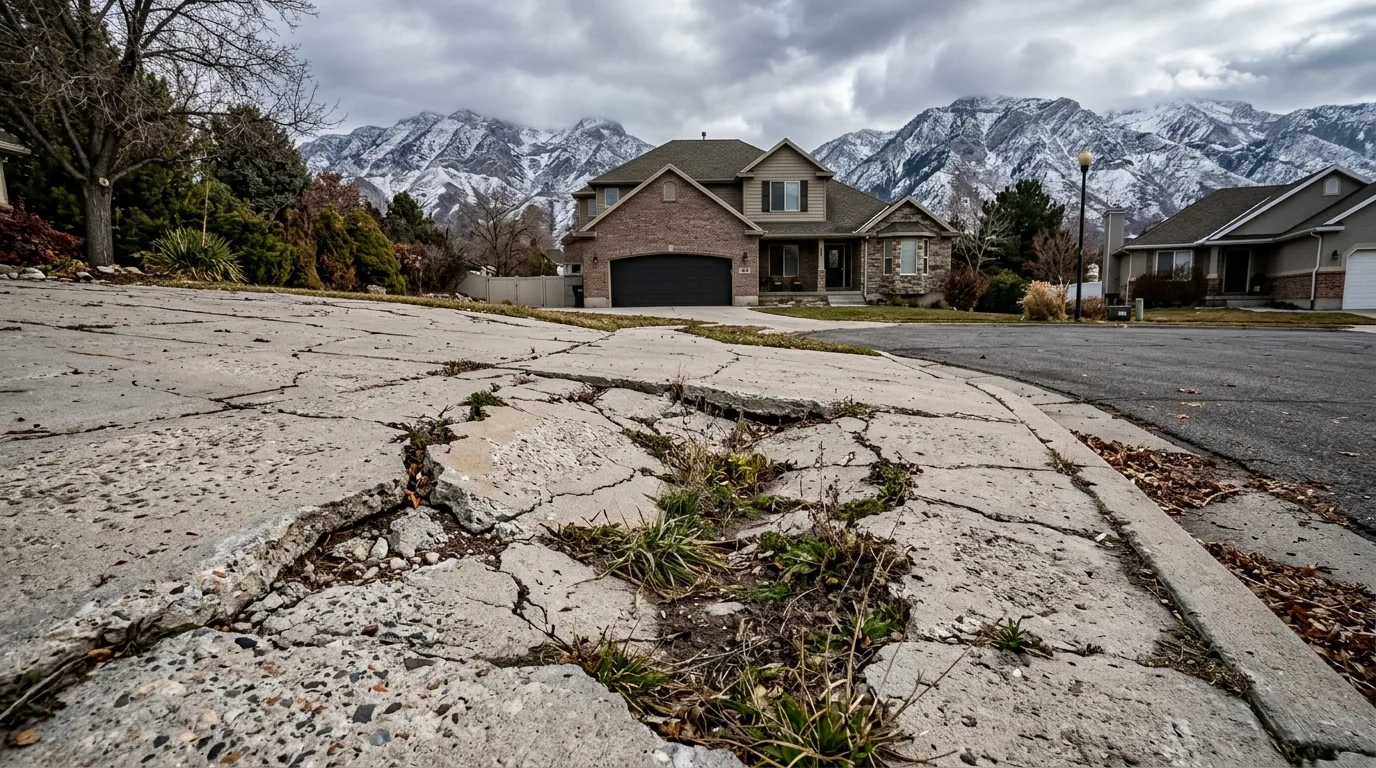
Many Vineyard homeowners watch damage patterns develop on their driveways for years before calling a concrete contractor — usually because they’re not sure whether what they see warrants a repair call or is just cosmetic. The answer matters financially: a crack repaired promptly costs $150–$400; the same crack left for two more winters of freeze-thaw cycling can require a $3,000–$5,000 section replacement. Here are the five signs your concrete driveway in Vineyard needs professional attention soon.
Free Driveway Assessment in Vineyard
Not sure if you need repair or replacement? We'll give you an honest assessment at no cost.
Sign 1: Cracks Wider Than a Quarter-Inch
Hairline cracks — thin surface fractures barely visible to the eye — are normal in concrete and typically cosmetic. Once a crack reaches 1/4 inch in width, it crosses into territory that requires attention. At that width, water flows freely into the crack during rain or snowmelt, and when temperatures drop below freezing, that water expands by about 9% and forces the crack wider. Over a Vineyard winter that includes roughly 100 freeze-thaw cycles, a 1/4-inch crack can widen to 1/2 inch or begin to displace vertically.
Vertical displacement — where one side of the crack has risen or sunk relative to the other — is especially urgent. Displaced cracks create trip hazards, cause water to pool in the depression, and indicate that the sub-base has moved or settled unevenly. This type of damage typically cannot be addressed with crack fill alone; mudjacking or section replacement is usually required. Document crack width and displacement with a photo and ruler — this gives you and any contractor a baseline to track whether the damage is static or progressing.
Sign 2: Surface Spalling Across More Than 10% of the Area
Spalling is the term for concrete surface damage where the top layer breaks away in flakes, chips, or pits, exposing the aggregate beneath. In Vineyard’s freeze-thaw climate, spalling is the most common form of driveway damage and the one that advances fastest without intervention. When the concrete surface sealer fails — typically after 3–5 years without reapplication — water infiltrates the surface layer and the freeze-thaw cycle begins breaking the paste apart from within.
Early-stage spalling is cosmetic and can be addressed with surface resurfacing or an overlay product. Once spalling exposes aggregate over more than a quarter of the slab and begins to compromise structural integrity, resurfacing is still usually the right answer — but the window for a cost-effective fix narrows. Waiting until the surface has deteriorated severely often means the only practical option is full replacement. If your driveway shows pitting, flaking, or rough aggregate exposure across more than 10% of the area, schedule a repair assessment before the next freeze season.
Get Ahead of Driveway Repair in Vineyard
Spring is the best time to assess and fix winter damage. Call Vineyard Concrete at (888) 376-0955.
Sign 3: Standing Water After Rain or Snowmelt
Concrete driveways are poured with a slight slope — typically 1/8 to 1/4 inch per foot — designed to direct water away from the garage and foundation. When sections of the driveway settle, heave, or the slab warps due to sub-base movement under Vineyard’s expansive clay soils, this drainage slope gets disrupted. The result: water pools on the surface rather than running off.
Standing water is a problem for two reasons. First, it accelerates spalling and freeze-thaw damage precisely in the areas where water collects. Second, water pooling near the garage or foundation can infiltrate those structures over time, causing far more expensive damage than driveway repair. Properties near Utah Lake, including the Holdaway Fields neighborhood, often have higher water tables that amplify this drainage concern. If you notice standing water on your driveway after rain or during spring snowmelt, it’s a sign the slope or sub-base needs attention.
Sign 4: A Section That Rocks or Shifts Underfoot
Walk slowly across your driveway and feel for any section that rocks slightly underfoot or feels different from the surrounding concrete. This “hollow” feeling or visible movement indicates that a void has formed in the sub-base beneath the slab — the soil has either settled, been washed out, or contracted during dry conditions in Vineyard’s semi-arid climate, leaving the concrete unsupported.
Unsupported concrete sections crack and break under vehicle loads that would be easily handled by a properly supported slab. The concrete itself may still look fine from above while the sub-base failure is silently progressing. Mudjacking can lift these sections and fill the void before the slab fractures. Address rocking sections before they crack under load — cracked sections cost more to repair than settled ones.
Sign 5: Accelerating Damage Season Over Season
Sometimes the most important sign is change over time rather than the damage you see at any single moment. Take photos of your driveway’s cracks and damage areas in spring (after winter damage is fully visible) and in fall (to capture any summer expansion). If the same cracks are measurably wider, longer, or have developed vertical displacement over one season, the damage is active — meaning it will continue without intervention.
Active damage in Vineyard driveways is almost always driven by ongoing soil movement, deteriorating drainage, or a failed sub-base. Static cracks — the same width in photos 2 years apart — can often be sealed and monitored. Growing cracks require a repair approach that addresses the root cause. For a full breakdown of what causes concrete to crack in Utah County, see our post on why concrete cracks in Utah County.
Repair vs. Replacement: The Honest Answer
Repair makes sense when: damage is surface-level or confined to isolated sections, the sub-base is structurally sound, drainage is correct, and the overall slab is less than 30 years old. Replacement makes more sense when: cracking is through the full slab depth across most of the driveway, sub-base failure is widespread, drainage problems have caused ongoing soil erosion, or the driveway is approaching end-of-useful-life. We never recommend replacement to sell a larger project when repair will genuinely solve the problem.
For our full repair service information, see concrete repair in Vineyard. For spring scheduling guidance, see best time to pour concrete in Vineyard.
Frequently Asked Questions
How quickly should I address a crack in my Vineyard driveway?
A crack wider than 1/4 inch should be addressed before the next freeze season if possible. Vineyard’s 100+ freeze-thaw cycles per year will reliably widen existing cracks each winter. Spring (March–May) is the ideal time to assess and repair winter damage.
Can I fill driveway cracks myself?
Consumer crack filler products can address hairline to 1/4-inch cracks cosmetically. For cracks wider than 1/4 inch, vertical displacement, or patterns indicating sub-base issues, professional assessment and repair will produce a more durable result than DIY products. Improper crack fill can trap moisture and accelerate freeze-thaw damage.
Does my Vineyard homeowner’s insurance cover driveway damage?
Standard homeowner’s policies generally don’t cover gradual concrete deterioration. Damage from sudden events (e.g., a vehicle impact or an isolated soil collapse) may be covered depending on policy terms. Check with your insurance agent for your specific coverage.
Free Driveway Assessment in Vineyard, Utah
Honest diagnosis — repair or replacement recommendation based on what your driveway actually needs. Call (888) 376-0955.
Related: